Obsolete components
Recreate parts that are no longer available from the original manufacturer or supplier.
REVERSE ENGINEERING
Reverse engineer physical parts into clean CAD geometry for replacement-part recreation, modification and manufacturing.
PRINTURA
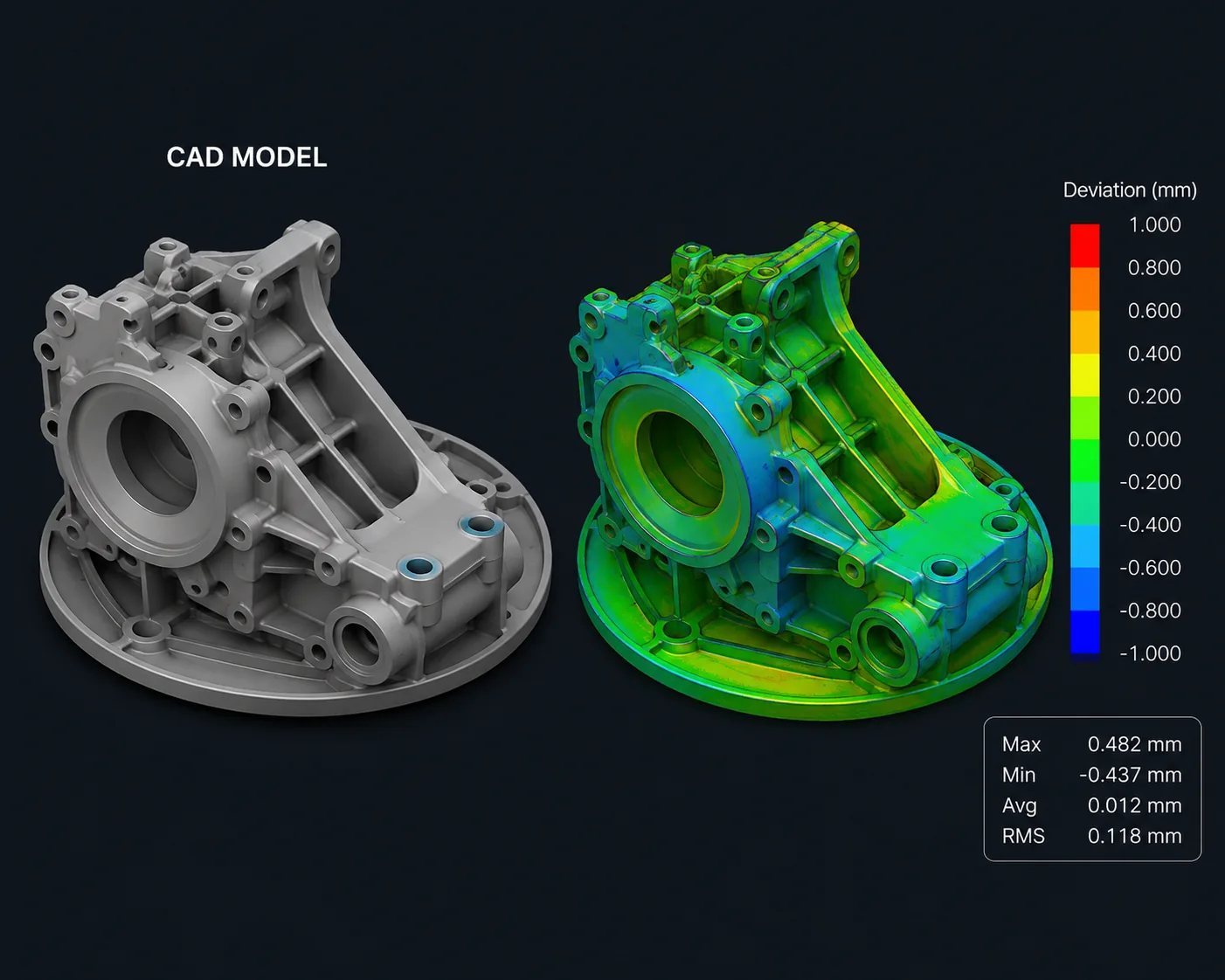
Reverse engineering starts with an existing physical component, 3D scan or set of measurements and turns that reference into clean CAD geometry. It is especially useful for replacement parts, obsolete or discontinued components, spare-part recreation, modifications and projects where the original manufacturer files are unavailable.
The goal is not simply to copy every surface. Where appropriate, the geometry is reconstructed with clear features and design intent so the result can be edited, adapted and used for manufacturing.
COMMON APPLICATIONS
Recreate parts that are no longer available from the original manufacturer or supplier.
Build a clean digital model from a physical reference for reproduction or future manufacturing.
Use the existing part as a starting point, then modify dimensions, interfaces or features for a new requirement.
Convert scanned reference geometry into a structured model that is more useful for engineering and manufacturing.
HOW IT WORKS
The physical part, scan, measurements and critical interfaces are reviewed to understand what needs to be preserved.
The geometry is rebuilt as clean CAD with the features and dimensions required for the intended application.
The reconstructed model is checked against the reference and prepared for modification, printing or manufacturing.
WHAT TO PROVIDE
Tell us which dimensions and interfaces are critical and whether the goal is an exact replacement, a modified version or simply a clean editable CAD model.
FREQUENTLY ASKED QUESTIONS
Short answers to common questions about this service and how it can fit into a project.
Scanning captures physical geometry. Reverse engineering uses physical measurements, scan data or other references to rebuild that information into purposeful digital geometry that can be edited or manufactured.
A physical part is usually the strongest reference, but existing scan data, measurements, drawings or other digital geometry may also be useful depending on the project.
Yes. The existing component can be used as a starting point while dimensions, interfaces or features are changed for the new requirement.
Yes, when the geometry and intended application are suitable. Reverse engineering can continue into modeling adjustments and 3D printing as one project workflow.
Often yes. An existing part, scan, measurements or drawings can be used to rebuild manufacturing CAD. The recreated geometry can also be modified if the original design needs a new interface, clearance or functional change.