Nebegaminami komponentai
Detalių atkūrimas, kai originalus gamintojas ar tiekėjas jų nebegali pasiūlyti.
ATVIRKŠTINĖ INŽINERIJA
Fizinių detalių atvirkštinė inžinerija į švarią CAD geometriją pakaitinių ir nebegaminamų komponentų atkūrimui, modifikavimui bei gamybai.
PRINTURA
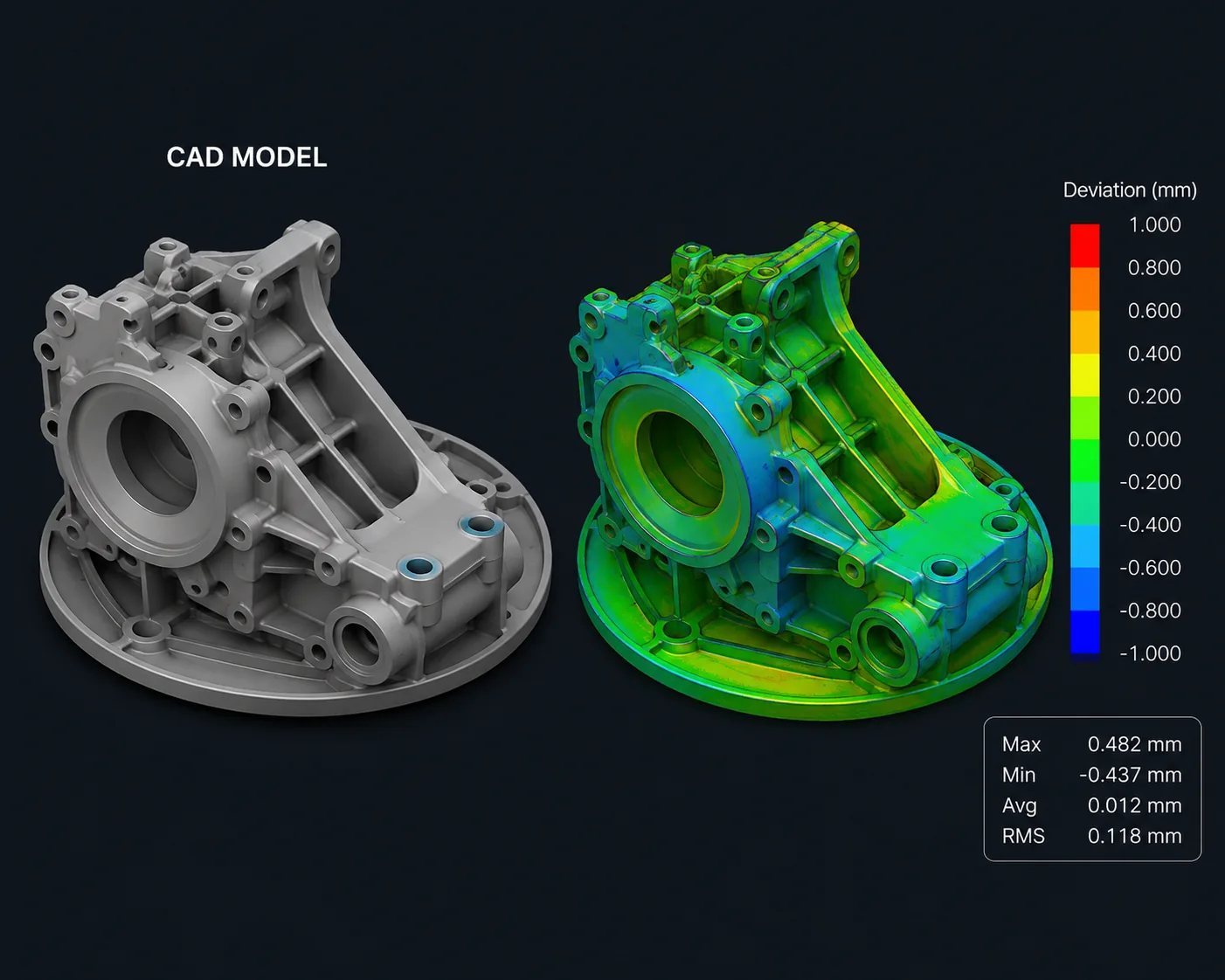
Atvirkštinė inžinerija prasideda nuo fizinės detalės, 3D skeno, skaitmeninio objekto ar matavimų ir šią informaciją paverčia švaria CAD geometrija. Ji ypač naudinga pakaitinėms detalėms, nebegaminamiems ar sunkiai gaunamiems komponentams, atsarginių dalių atkūrimui, modifikacijoms ir projektams, kurių originalūs gamintojo failai nepasiekiami.
Tikslas nėra aklai nukopijuoti kiekvieną paviršių. Kai tikslinga, geometrija atkuriama su aiškiais elementais ir projektavimo logika, kad modelį būtų galima redaguoti, pritaikyti ir naudoti gamybai.
DAŽNI PRITAIKYMAI
Detalių atkūrimas, kai originalus gamintojas ar tiekėjas jų nebegali pasiūlyti.
Švaraus skaitmeninio modelio sukūrimas pagal fizinį objektą pakartotinei gamybai ar ateities darbams.
Esama detalė naudojama kaip pradinis taškas, o matmenys, sąsajos ar funkcijos keičiamos pagal naują poreikį.
Nuskenuota geometrija paverčiama struktūrizuotu modeliu, kurį patogiau naudoti inžinerijai ir gamybai.
DARBO EIGA
Peržiūrime fizinę detalę, skaitmenine geometriją, matmenis ir kritines sąsajas, kad būtų aišku, ką būtina išlaikyti.
Geometrija atkuriama kaip švarus CAD modelis ir matmenimis, reikalingais numatytai paskirčiai.
Atkurtas modelis palyginamas su atskaita ir paruošiamas modifikavimui, 3D spausdinimui ar kitai gamybai.
KĄ PATEIKTI
Nurodykite, kurie matmenys ir sujungimai yra kritiniai bei ar reikia tikslios kopijos, pakeistos versijos ar tiesiog švaraus redaguojamo CAD modelio.
DAŽNI KLAUSIMAI
Trumpi atsakymai į dažniausiai kylančius klausimus apie šią paslaugą.
Skenavimas užfiksuoja fizinę geometriją. Atvirkštinė inžinerija naudoja matavimus, skenavimo duomenis ar kitą atskaitą ir atkuria tikslingą skaitmeninę geometriją, kurią galima redaguoti ar naudoti gamybai.
Fizinė detalė dažniausiai yra geriausia atskaita, tačiau priklausomai nuo projekto gali būti naudingi ir turimi skenavimo duomenys, matavimai, brėžiniai ar kita skaitmeninė geometrija.
Taip. Esama detalė gali būti pradinis taškas, o matmenys, sąsajos ar funkcijos keičiamos pagal naują poreikį.
Taip, jei geometrija ir numatoma paskirtis tam tinkama. Atvirkštinė inžinerija gali tęstis modeliavimo pakeitimais ir 3D spausdinimu viename projekte.
Dažnai taip. Esama detalė, 3D skenas, matavimai ar brėžiniai gali būti naudojami gamybiniam CAD modeliui atkurti. Geometriją taip pat galima koreguoti, jei reikia pakeisti sąsają, tarpą ar kitą funkcinį elementą.